Structured pathways that build focus, confidence and long‑term engagement
School impact at a glance
Instrumental learning enables pupils to:
- Improve self‑regulation, perseverance, focus and learning stamina
- Build confidence, belonging and positive engagement
- Create clear progression routes beyond enrichment.
Overview
High‑quality instrumental and vocal tuition delivered during the school day by experienced HMS specialists.
HMS manages tuition directly with families for most schools. Pupils apply directly through HMS; we manage safeguarding, billing and administration, working closely with your school.
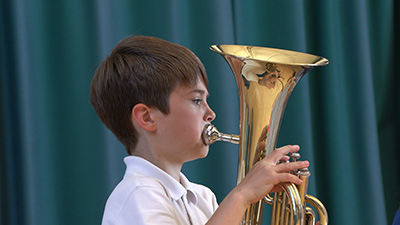
Learning an instrument offers pupils a joyful, motivating and rewarding way to develop their musicianship, build confidence and explore their creativity.
What we offer
- Specialist teachers.
- Wide range of instruments and styles.
- Full administration and safeguarding.
Session structure
- Lessons take place during the school day.
- Teaching can begin at agreed points across the school year, subject to staff availability.
- HMS teachers require a minimum of one hour per visit.
- Lesson times are arranged collaboratively with your school to minimise curriculum disruption.
Information:
Costs (from September 2026)
Fees that parents/carers pay for lessons vary depending on lesson type and duration. More information on lesson fees are .
A few schools manage instrumental tuition billing and adminstration themselves 'in house'. For these schools, the fee is £54.04 per hour, per teacher in 2026-27.
What your school provides
To ensure high‑quality delivery, schools are asked to provide:
- Suitable teaching space
- Support with communication
- Timetabling collaboration
- Encouragement for regular pupil attendance
- Opportunities for pupils to celebrate their progress.
Foundation skills strengthened
Instrumental and vocal learning supports a wide range of essential skills, helping pupils to:
- Develop sustained attention and focus through regular, structured practice
- Build working memory and recall by learning, retaining and applying musical material
- Improve auditory discrimination and phonological awareness, supporting reading and language development
- Strengthen fine‑motor control and bilateral coordination, closely linked to handwriting fluency
- Enhance self‑regulation, perseverance and readiness to learn, contributing positively to behaviour and engagement
- Grow resilience, goal‑setting skills and personal responsibility
- Develop confidence through steady progress and achievable challenges.
Learning an instrument is a meaningful, long‑term commitment that enriches both personal and musical development.
Why this is cost-effective for schools
Our tuition model helps schools:
- Boost attendance, motivation and engagement through meaningful participation
- Increase self‑regulation and learning readiness, easing behaviour pressures
- Establish clear progression pathways that keep pupils engaged in school life
- Reduce unplanned external costs by offering a sustainable, in‑school music provision.